
Purchasing a firearm can be exciting yet intimidating, especially if it’s your first time going through the process. Beyond selecting the right firearm for your needs, there’s an important legal requirement that many first-time buyers find confusing: ATF Form 4473. Understanding the form’s essentials can help ensure your purchasing process goes smoothly and remains fully compliant with federal law.
What is ATF Form 4473?
Form 4473, officially known as the Firearms Transaction Record, is a document required by the Bureau of Alcohol, Tobacco, Firearms and Explosives (ATF) for all firearms purchases from licensed dealers. This form serves as the official record of the transaction and initiates the background check process that determines your eligibility to purchase a firearm.
The form plays a critical role in the firearms purchasing system by:
- Documenting the transfer of firearms from dealers to buyers
- Providing information necessary for the National Instant Criminal Background Check System (NICS)
- Creating a paper trail that helps law enforcement trace firearms if necessary
- Ensuring that buyers meet all legal requirements for firearm ownership
Frequently Asked Questions for First-Time Users
General Questions About Form 4473
What is Form 4473 and why do I need to fill it out?
Form 4473 is a document issued by the federal government that records your firearm purchase and provides information for any required background check. Federal law requires it for most firearms purchases from a Federal Firearm Licensee. The form helps protect against straw purchases by verifying that you’re legally eligible to purchase and possess a firearm under federal law.
Who is required to fill out Form 4473?
Anyone purchasing a firearm from a licensed firearm dealer must complete Form 4473. This requirement applies regardless of whether you’re buying a handgun, rifle, or shotgun. A family relationship does not create an exemption when the transfer is processed through a dealer.
What documents do I need to provide along with the form?
You’ll need to provide valid, government-issued photo identification that includes your name, address, and date of birth. A driver’s license or state ID card is most commonly used. If your current address differs from the one on your ID, you must provide acceptable supplemental government-issued documentation showing your current residence, such as a government-issued tax bill or vehicle registration.
Specific Sections and Information Required
What personal information will I be required to disclose?
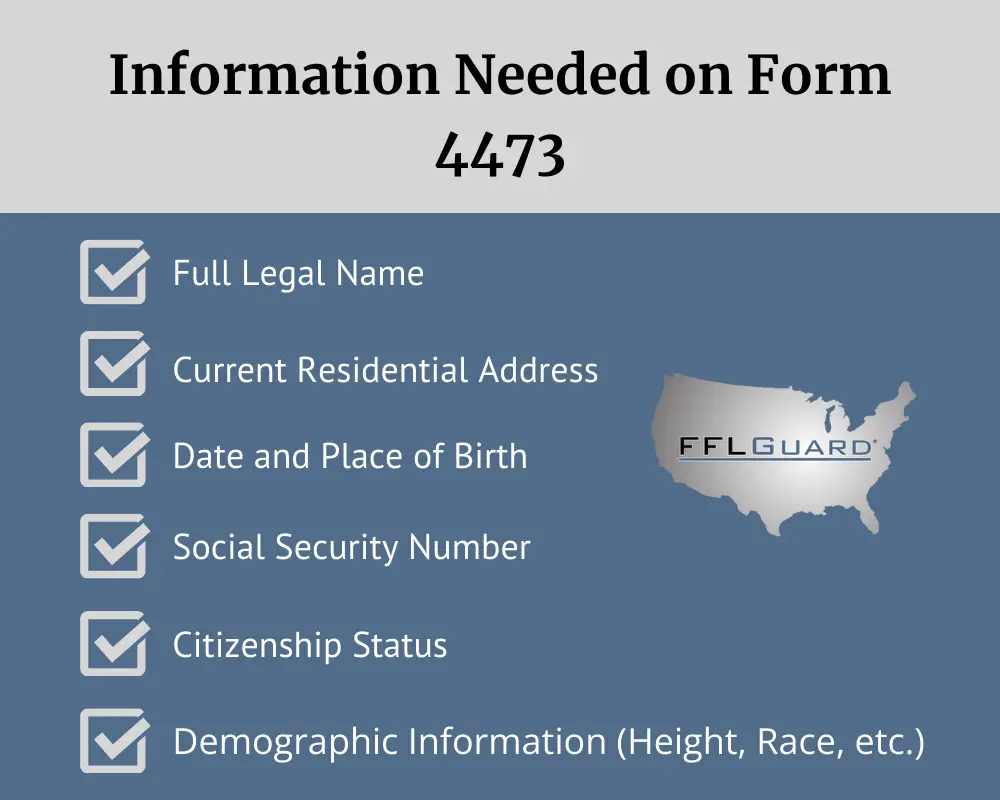
Form 4473 requires:
- Full legal name
- Current residential address
- Place of birth and date of birth
- Height, weight, and sex
- Ethnicity and race (both required)
- Social Security Number (optional but may help avoid delays)
- Citizenship status
Accuracy is crucial when providing this information. Even minor discrepancies between your form and identification can cause delays or denials.
How is my information used and who can access it?
The information you provide is primarily used to conduct your background check through the FBI NICS. The completed Form 4473 is retained by the dealer until the business or licensed activity is discontinued and can be accessed by ATF agents for compliance inspections or criminal investigations. The form isn’t sent to a government database for routine purchases, though the dealer must report multiple handgun purchases.
What does the “Criminal History” section entail?
This section asks a series of “yes or no” questions about factors that might prohibit you from purchasing a firearm. A prohibited person can include someone with:
- Felony convictions
- Domestic violence convictions
- Mental health adjudications
- Dishonorable discharges from the military
- Illegal controlled substance use
- Restraining orders
Knowingly providing a false statement can result in criminal charges, fines, and imprisonment, so answer each question fully and honestly.

Can I complete Form 4473 online, or must it be paper?
While the ATF allows for electronic Form 4473 systems, you must still physically visit the dealer and sign the form in person. Many dealers use computerized systems to help ensure accuracy, but the process still requires your physical presence, verification of identity, and signature. The form must be completed at the dealer’s premises.
FastBound is a firearms compliance software backed by FFLGuard that streamlines A&D bound books and 4473 forms for seamless federal and state compliance.
Legal Implications and Your Rights
What are the legal consequences of filling out Form 4473 incorrectly?
Knowingly providing false information on Form 4473 can result in substantial fees or even criminal charges. Honest mistakes can usually be corrected, but they must be handled quickly. If you realize you’ve made an unintentional error, immediately notify the gun dealer so they can help you correct it properly.
Can I refuse to answer any of the questions on Form 4473?
All required questions that apply to your transaction must be answered for the transaction to proceed. Refusing to answer mandatory questions will result in the FFL holder being unable to transfer the firearm to you. The form represents a legal requirement, not an optional process.
What do I do if my answer is questioned by the FBI or dealer?
If your background check results in a “delay” status or if the dealer questions one of your answers, remain calm and cooperative. Provide any clarification or additional information requested. In some cases, you may need to provide court documents or other records to resolve questions about your background. For complex situations, consulting with an attorney who specializes in firearms law may be helpful.
Common Concerns for First-Time Gun Buyers
How do I know if I am eligible to purchase a firearm?
Generally, you are eligible to purchase a firearm if you:
- Meet the age requirements applicable to the firearm and transaction, including state and local requirements. See the handgun age update below.
- Meet applicable citizenship or immigration-status requirements
- Have not been convicted of a disqualifying offense
- Are not subject to a disqualifying restraining order
- Have not been adjudicated as mentally defective or subject to a disqualifying commitment to a mental institution
- Are not an unlawful user of or addicted to controlled substances.
Handgun age update: The federal statute still sets a minimum dealer-sale age of 21 for handguns and 18 for rifles and shotguns. However, on September 18, 2026, DOJ announced its conclusion that the handgun age restriction cannot be criminally enforced against dealers selling to otherwise law-abiding adults ages 18 to 20. This opinion does not amend the statute or remove state age restrictions. Buyers ages 18 to 20 should confirm the requirements applicable to their transaction with the dealer before purchasing.
What should I do if there’s a mistake on my form after I’ve submitted it?
If you discover an error after submission but before the transfer is completed, immediately notify the dealer. They can have you complete a new form or make corrections to the existing one following proper ATF procedures. If the transfer has already occurred, contact the dealer for guidance on properly documenting the correction.
Is my medical or mental health information requested on Form 4473?
The form does not request your complete medical history. However, it does ask whether you have ever been “adjudicated as a mental defective” or “committed to a mental institution.” These are specific legal terms referring to formal court or lawful authority determinations, not simply seeking mental health treatment. Voluntary counseling or therapy does not typically trigger these prohibitions.
What happens after I submit the form?
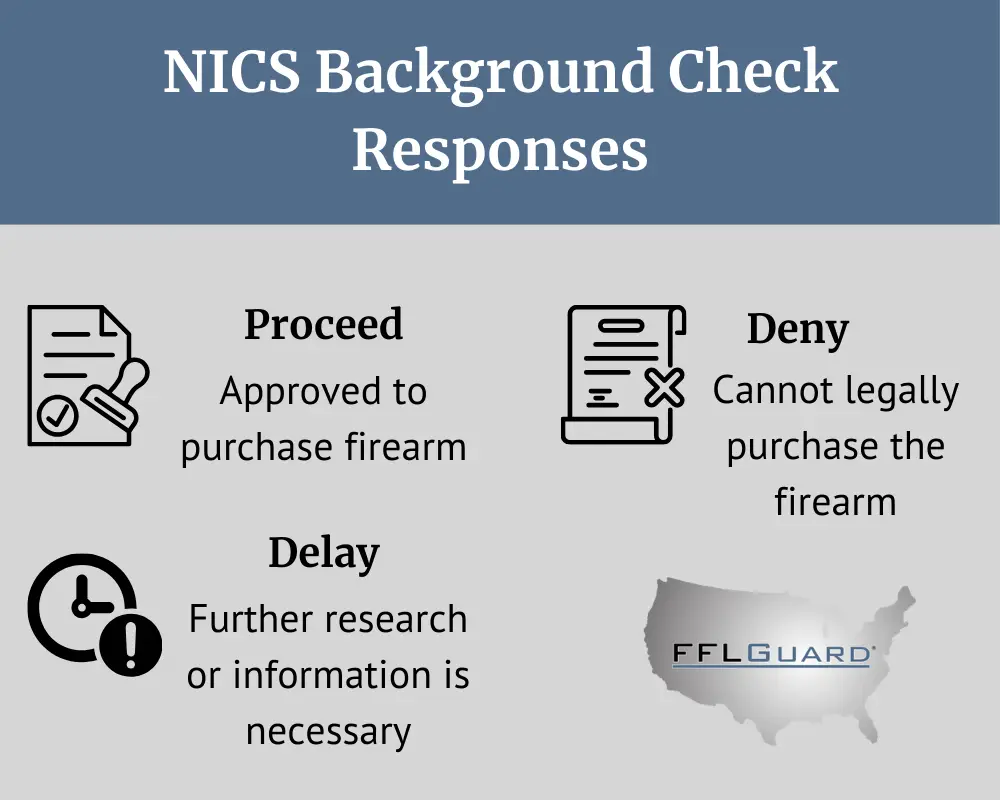
After you complete Form 4473, the dealer will conduct any required background check through NICS or the appropriate state agency.
- Proceed: You’re approved to purchase the firearm
- Delay: Further research is needed (can take up to 3 business days)
- Deny: You cannot legally purchase the firearm
Most checks are completed in minutes, but delays are not uncommon, especially for first-time buyers or those with common names.
Additional Tips & Best Practices
Before Filling Out the Form:
- Review a sample Form 4473 online to familiarize yourself with the questions
- Gather all necessary identification and supporting documents
- Be prepared to answer questions about your background honestly
- Consider any potential issues in your background that might need clarification
During the Process:
- Take your time reading each question carefully
- Ask the dealer for clarification if any question seems confusing
- Answer truthfully – attempting to deceive the system is both illegal and ineffective
- Double-check all information before signing
After Completion:
- Consider keeping a copy of the receipt for your records
- Store your firearm safely and securely when you return home
- Familiarize yourself with local laws regarding transportation and storage
- Consider taking a safety course if you haven’t already done so
Reach Out to our Firearms Legal Experts at FFLGuard
Accurate Form 4473 records are part of an FFL’s everyday compliance responsibilities. FFLGuard brings compliance professionals, former ATF experts, and firearms attorneys together to help dealers prevent problems, respond to ATF concerns, and defend their businesses in covered regulatory matters.
PREVENT. RESPOND. DEFEND.
Our Law Plus Guidelines give clients a practical framework for working with the same compliance and legal team before, during, and after an ATF issue. That’s COMPLIANCE POWERED BY COUNSEL.
Have questions about Form 4473 procedures or your business’s compliance obligations? Contact us to discuss how FFLGuard can help.